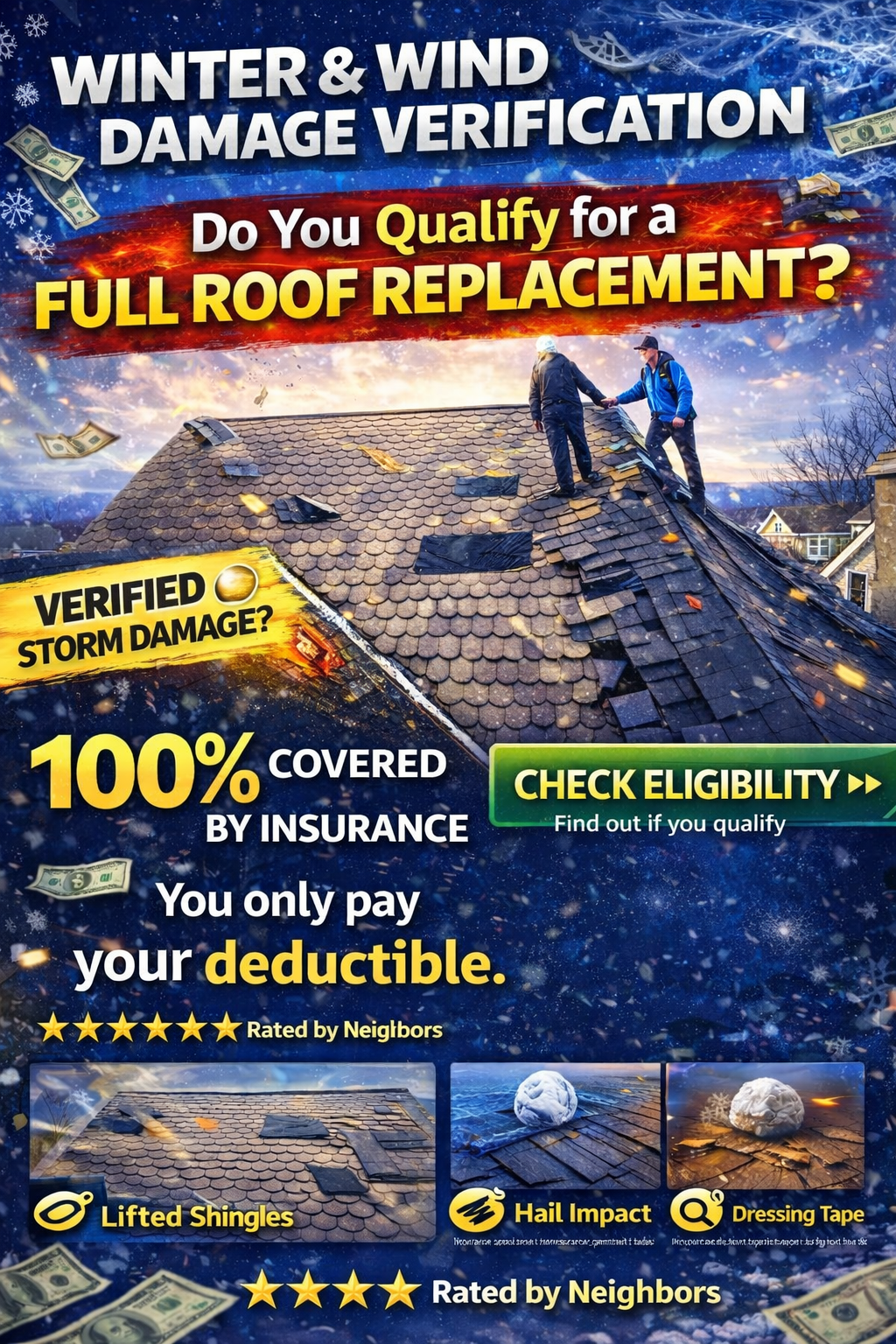
Many homeowners in the Northeast are paying $15,000 to $25,000 out of pocket for a new roof simply because they didn’t realize they had valid insurance claims for wind or hail damage until the filing deadline had passed.
In this guide, we’ll explain exactly how to spot hidden storm damage, how the insurance qualification process works, and why waiting can cost you thousands.
1. What Does “Qualifying” Actually Mean?
“Qualifying” for a roof replacement doesn’t mean finding a loophole. It simply means verifying that your roof has sustained damage covered by your homeowners’ insurance policy.
Most policies covers “Acts of God,” which includes:
- Wind Damage: Gusts over 50mph that lift or crease shingles.
- Hail Damage: Ice impacts that bruise the shingle mat.
- Falling Debris: Tree limbs or heavy ice dams.
If a licensed restoration contractor can document sufficient storm damage, your insurance carrier is often obligated to pay for the restoration of the property to its pre-storm condition. Your only cost is typically your deductible.
2. The “Invisible” Damage: Why You Need a Professional Inspection
The biggest mistake homeowners make is looking at their roof from the driveway and thinking, “It looks fine.”
Storm damage in NY, NJ, PA, CT, and MA is often subtle to the untrained eye but fatal to the roof’s lifespan. Professional inspectors look for these specific indicators:
- Wind Lift & Creasing: Strong winds can break the adhesive seal underneath a shingle. Once unsealed, the shingle flaps in the wind, creating a dark horizontal “crease” near the top. This is a future leak point that qualifies for coverage.
- Hail Bruising: You might not see holes, but hail knocks the protective granules off your shingles. This exposes the asphalt layer to UV rays, causing the roof to “sunburn” and crack prematurely.
- Granule Loss: Have you noticed excessive “sand” in your gutters or downspouts? That is your roof deteriorating rapidly due to weather stress.
Pro Tip: If your neighbors are getting new roofs, there is a very high probability your home was hit by the same storm swath. Storms don’t skip houses.
3. The 3-Step Qualification Process
At Top Pro Restorations, we simplify the confusing insurance process into three clear steps for homeowners across the Northeast:
Step 1: The Forensic Inspection
We perform a complimentary, no-obligation inspection of your entire roofing system. We take high-resolution photos of shingle damage, flashing issues, and collateral damage (gutters, siding) to build a solid report.
Step 2: The Adjuster Meeting
If we find qualifying damage, you file a claim. We then meet the insurance adjuster on your roof to point out the damage we found. This is crucial—having an expert advocate ensures the adjuster doesn’t overlook subtle wind or hail markers.
Step 3: Approval & Restoration
Once the scope of work is approved by your carrier, we replace the roof using top-tier architectural shingles. The insurance company sends the check for the construction; you pay your deductible.
4. Will This Raise My Insurance Rates?
This is the #1 fear homeowners have.
Generally, the answer is No.
In the insurance world, storm damage is considered a “No-Fault” claim (or Act of God). Unlike a car accident where you were at speeding, you cannot control the weather. Insurance carriers typically do not raise individual premiums for filing a storm claim.
Instead, carriers raise rates for entire zip codes based on the overall risk of that area.
If a massive storm hits Hartford, CT or Allentown, PA, rates in that area may go up regardless of whether you file a claim or not.
The Reality: You are likely already paying higher rates due to the storm risk in your area. You might as well use the coverage you are paying for to protect your home.
5. Why Northeast Roofs Are at Higher Risk
Homes in our service area—New York, New Jersey, Pennsylvania, Connecticut, and Massachusetts—face a unique threat: Freeze/Thaw Cycles.
When a shingle is damaged by wind or hail, water seeps into the micro-cracks. In the Northeast, that water freezes at night and expands, widening the crack. This cycle repeats dozens of times per winter, turning minor storm damage into major structural leaks in just 1-2 years.
Don’t Wait Until It Leaks. Most insurance policies have a statute of limitations (often 1 year) to file a claim after a storm event. If you wait until you see a leak on your ceiling, the deadline may have passed, leaving you to pay the full replacement cost out of pocket.
Check Your Eligibility Today
Do not guess about the health of your roof. Top Pro Restorations offers free, professional storm damage assessments across NY, NJ, PA, CT, and MA.